
Pachinko
Every buy drops balls. Holders catch the SOL.
Every 0.05 SOL of a buy drops a ball. The lanes are the holders: a ball in your lane puts 0.5% of the pot in your tray. The tulip starts FEVER at 3x.
Recording 1 000 real trades of another pump.fun coin, replayed through the rules
$PACHI
The contract goes here at launch


Links light up when the coin is live.


Each ball lands where its trade's signature and the block two slots later send it.
Pot2 SOL
In the trays0 SOL
Balls dropped0
Spilled to holders0 SOL
The lanes
The top 48 holders with 100 000 $PACHI or more, side by side on the machine's rail. Lane is the position on the rail from the left; its width is the holder's share, never more than 10%. Point at a row to light its lane; click an address to copy it.
How it lands
Four things happen in the machine. Nothing runs on a clock: only trades move it.

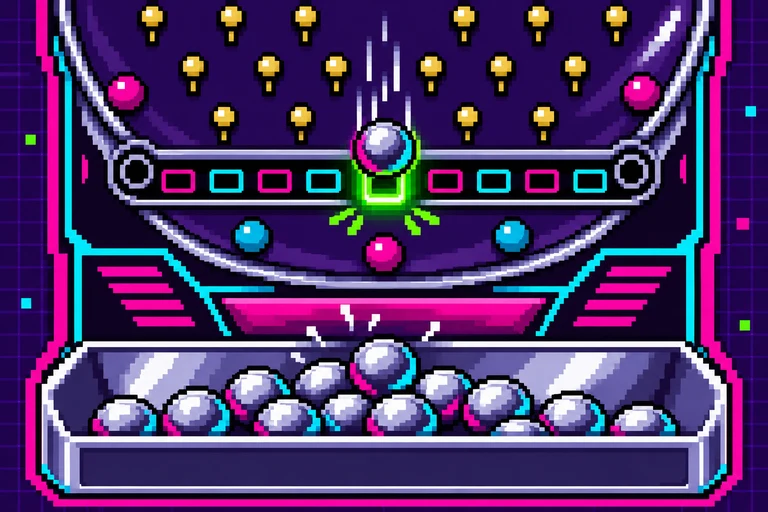


Every ball, from the chain
Nobody picks where a ball lands, not even the keeper. Its seed is the trade's signature mixed with the hash of the block two slots later, which did not exist when the trade was signed.
h = sha256(signature ‖ blockhash(slot + 2) ‖ part ‖ ball)
The first 6 bytes of h pick the spot: under 1/64 is the tulip, the rest is spread over the lanes by their width. The Rules page recomputes any ball from its transaction, in your browser, and draws its path.